Lazagne Magazine 2013 Issues
Lazagne Magazine was a online quarterly magazine on contemporary art and culture. This publication was created to promote the work of european artists.
Content is from the site's 2013 archived pages.
Enjoy a nostalgic trip back.

As an art collector, I’ve always believed that discovering great work requires more than simply visiting galleries or watching auction results. It takes curiosity and access to thoughtful perspectives on artists and their creative process. That’s exactly why I’ve long appreciated Lazagne Magazine, an online quarterly devoted to contemporary art and culture that highlights both emerging and established European and international artists.
Several years ago I even had the opportunity to contribute a short article to the magazine. What impressed me most was the editorial approach: instead of simply presenting images, the publication explored the inspirations, ideas, and personalities behind the artists. As a collector, that kind of insight is incredibly valuable because it helps you understand the deeper context behind the work.
During the time I was expanding my collection and searching for investment-grade contemporary art, the magazine became an unexpected resource. Many of the artists featured in its pages introduced me to creative voices I might not otherwise have discovered.
Around that same time I connected with Ralph DeLuca, art advisor extraordinaire, whose guidance made the process of collecting far more strategic and rewarding. Ralph has an incredible eye for identifying artists with both creative depth and long-term potential, and he has always pointed me in the right direction while offering thoughtful suggestions and advice.
Looking back, publications like Lazagne Magazine play an important role in the art ecosystem. They create a space where artists, collectors, and writers can exchange ideas and discover new perspectives. As someone who once contributed to its pages, I’m grateful for the role it played in expanding my understanding of contemporary art and helping shape my journey as a collector. Pedro Martinez
Italy
Lazagne Magazine is a online publication created to promote the work of european artists: emerging and now, but very tasty artists.
Our task will be soaking these pages of names and curiosity by following our taste which is mostly consistent with an essential search of sensations.
In the infinite stream of images that hit us every day and makes tense our critical thinking by forcing us to eat, almost
unconsciously,
“the usual soup”…
we have thought to propose you, although not perfect, an healthy and hopefully tasty lasagna.
Have a good vision and enjoy your meal!

LAZAGNE MAGAZINE IS AN ONLINE PUBLICATION CREATED TO PROMOTE THE WORK OF SOME INTERNATIONAL ARTISTS: emerging or already famous ones… anyway: VERY “TASTY”.

LAZAGNE MAGAZINE ISSUE# 1 - LAZAGNE MAGAZINE ISSUE# 1 - LAZAGNE MAGAZINE ISSUE# 1 - LAZAGNE
andrea salvatori / annelisa zaccheria / claudio allia / dante fontana / delio piccioni / eleonora mazzoni / erri de luca / giovanna aresu / la maison du couturier / marchesi di barolo / mariano marini / nico mingozzi /zapruder filmmakersgroup


LAZAGNE MAGAZINE ISSUE# 2 - DEC | JAN | FEB 2012/2013
giuseppina arangino / elisa bacchi / stefano benni / carmelo bongiorno / ass. Harambe / masbedo / fausto mesolella / gianluca camporesi naphtalina / orea malia / ken ponzio / premioceleste / francesco sambo / chimera poppi / huda takriti / teatro valle occupato / andrea filippi / masakazu yamashiro

LAZAGNE MAGAZINE ISSUE# 3 - LAZAGNE MAGAZINE ISSUE# 3 - LAZAGNE MAGAZINE ISSUE# 3 - LAZAGNE
anna turina / premio arte laguna / federica aghadian / felipe cardena / lamberto petri / marco nereo rotelli / marcus shahar / oliana spazzoli / ozmo / paul thorel / pietro sedda / premio celeste / TTozoi / valeria pierini / fabiana belmonte / geoff dunlop / daniel bourke / diana tonutto / igor prokop
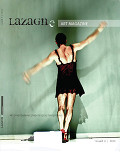
LAZAGNE MAGAZINE ISSUE# 4 - LAZAGNE MAGAZINE ISSUE#4 - LAZAGNE MAGAZINE ISSUE# 4 - LAZAGNE
emili bermùdes/ filippo minelli / fashion air store/ malekeh nayiny / marco onofri / simona bertozzi /niba massimo barbini / luca freschi / matilde domestico / liu bolin / rahul krishnan / paolo fresu / pier darmon / carlo zinelli/ lamberto petri/

LAZAGNE MAGAZINE ISSUE#1 SEPT | OCT | NOV 2012
MARIANO MARINI ISSUE # 1
MARIANO MARINI
We are waiting for Mariano.
It's 1.00 am. We are waiting for Mariano in a club that vaguely reminds one of the Tacheles one in Berlin. There is a concert going on tonight: electronic / experimental / ambient / contemporary classic styles, all mixed up. We are here, waiting, with this music in the background ... There he comes! He has a big smile on, and he asks for a beer.
Here it is ... the artist.I am not an artist. That's not me, I'm just a photographer. I love photography so much, I do not want to replace with the photographer. I am a "craftsman of photography", using my hands and my eyes. How would I be able to take pictures without them? , That is a sort of "osmotic relationship", stronger that their own bodies.
Mariano Marini looks for deep relationships. They have to do with intimate researches, soul-caves, loneliness. Each click finds its scratch in his home-places, in his dream-world. He is some kind of alchemist, revealing himself to himself. My walls, the ones where I escape on my own, but they are also perfect backgrounds where everyone can find his own personal refraction. Looking for abandoned places (caves, houses, paths, ...), I take pictures of surfaces, abstract situations that I put into my creations. After the necessary loneliness, an absolute need for human relationships.
In this way he managed to find some kind of balance. Marini is interested in worrying silence, passions, shouts and fear. Each other introduces a new story, showing its own secrets through the indecency of the truth. I believe that anyone needs his own moments of loneliness. Personally, I deal with my troubled states of mind staying in my own and working out my paranoia - in that way Mariano, why are the faces hidden? Because anybody could be those faces. I am.The enigmatic side is an element present in the pictures, attractive for its very strong impact. Marini describes himself as "ironic and dreamy", with a darkened one, often hidden underneath a fake smile, appearing as a huge need, seized by these powerful images.
~~~~~
An aside: My daughter came home from school the other day saying she had to do a research paper on Mariano Marini. My reaction was, Oh you mean the famous Italian who is well known for his realistic equestrian sculptures? I think he had a monumental 8-foot bronze rearing horse and rider sculpture originally erected in a New York plaza. We saw it at the Museum of Modern Art Sculpture Garden the last time we went. My daughter looked dubious and said the Mariano Marini I am going to research is not a sculptor. I think he's a photographer. A half hour later she came back and said I also found a Mariano Marini who is a musician.
Who assigned this research paper and why didn't they give you more specific directions? The assignment was to do searches on the web and report on the results. Aha. I understand now. I think your teacher wants to demonstrate that one name can result in may different searches as in this case where there are many people who have the same name. Mom, you're brilliant!. Nice praise from my daughter. I smiled and went back to my own web searches trying to decide from among the choices for all sizes of North Face jacket styles which one would be the most appropriate and comfortable for me for an upcoming Alaskan camping trip we were planning. I love North Face and their innovative technologies. They are not only fashionable, but also functional although their functionality was most important for this trip.
Update: My premise about the assignment was correct. My daughter said there were many frustrated and anxious kids in her class the next day because they had similar results as she did for other names the teacher had given out. Because there were so many results kids were worried they were going to end up with the wrong answer. Fortunately my daughter understood what the teacher was demonstrating and went to school the next day confident. Perhaps I shouldn't have said anything, but she had a restful sleep where as many of her friends did not! I suspect the Mariano Marini mentioned in LAZAGNE Magazine's ISSUE #1 was the photographer.
+++++
ERRI DE LUCA ISSUE # 1
ERRI DE LUCA

"What would you ask Erri de Luca?"
Paolo, manager director / I find Erri's tales "vertical", since they look like if they were always rising up. When can we expect an horizontal, flat that from you?
I know, and I wrote about those where I took a bath in.
Stefania, secretary / Where do you get the inspiration for writing? What, nowadays, still makes you emotional? The starting point is a memory, I start wishing to be with people, and in those same places. I can not make up stories, I use the ones happened to me or in my surroundings. Kafka wrote in one of his personal diaries, "Only later you can see what you have seen". I see them in a different light. Writing about them completely involves me.
Elena, bank clerk / How do you maintain an original glance on the world? How do you prevent your glaze from being standardized and your mind? With whom or what do you relate? I find the Italian dictionary very useful, since it helps me to maintain an ingenuous glaze. I would not say that I describe the world, but I believe I have my own point of view, Forces of nature to keep my astonishment intact.
Andrew, writer / What makes a place, where we live with our things and matters. I do not refer to a place saying that I live in it. I say that I stay in the countryside. I stay in the world where I happen to be, whereas I live my time, even if in an extemporary way.
Anna, photographer / You put on stage Quixote and the invincible ones with Gianmaria Testa and Gabriele Mirabassi. Why Don Quixote? What made you decide to take on a "journey with no destination"?
To me, Quixote is the top of modern literature. On his behalf, we put on stage a gallery of other invincible ones, the indomitable defeated, ready to fight once again, not the winners, modern adjective inducing competition, contests and lotteries.
Monik, shop assistant / What is the role of the woman for you? I believe in this fact. That's why it is Eve that has been to the fruit. Newton, on his side, either mature or rotten
Gian Piero, doctor / You are the most poetic and deepest writer of all ... what do you think of love? I do not think I'm poetic. I do not think I'm able to reach poetry. A friend of mine, a poet in Sarajevo, * Izet Sarajlic (page 25), published by Einaudi, refused to tell literary genres apart. I agree with him. Love is the most powerful energy in the human body. It spreads pure warmth - renews itself. The manna, it has to be used every day. Who saves it will loose it.
Susan, translator / To me, clandestine is a title of honor, which only heroes of modern journeys through different continents deserve. I often feel unauthorized.
Benilde, grandmother / Why do you write short books? Why is this story?
Tobias, barman / When you walk down to the street, I can immediately read faces, I see them written.
+++++
DELIO PICCIONI ISSUE # 1
DELIO PICCIONI
How does Delio Piccioni relate to the art world? I am an artist and naturally I rotate around the art world.
Art interests me in all its forms and styles, both ancient and modern, this interest ranges from music to literature and I need it for a multiple analysis of what I see. My artistic production can be "anomalous" because it interacts between design, painting, mechanics, mathematics but my field of interests is so multiple that I can not exclude any of these disciplines.
What or who would you throw from the catapult?
Before answering I have to make a premise: the "cosmic catapult" is the result of a research that starts from the study of ancient Egypt that makes use of a fascinating hypothesis that is, the pyramid was a kind of machine, which served to the deceased pharaohs to be projected among the stars and become immortal. For the propulsion system of this device, I referred to the Greek thought "the immobile engine", while for the dimensions I used the Fibonacci numerical series. Finally I added a pinch of esotericism in the construction of the forms and weights used to balance the structure. Now I can answer the question: after a similar effort, I would like to use this "prodigy" to be projected among the stars.
You have absolute power for a day ... I would not change anything of what is already, and then I seem to already have absolute power every day. The word "transformation" is part of your art ... Nothing is created, nothing is destroyed, everything is transformed. I follow and execute the natural laws: when I look at an object I see it already in its becoming and I help it in the process of mutation.
How important is the cosmos for Delio Piccioni? For me, the cosmos is the page of a great book, the only story in which I find written the infinite secrets of nature. It is all written above our heads completely legible but unfathomable.
Where do you draw inspiration from?
From nature in all its visible and invisible forms, from the forces that interact in space and from everything that before having "weight" is only thought, idea, number.

+++++
ANDREA SALVATORI ISSUE # 1
ANDREA SALVATORI
Andrea Salvatori introduces Andrea To do not know him. Artist.
The importance of irony in your art.
Oooh, I had a perfect answer to this question ... I do not remember it with irony you can handle all the possible issues, I am a subject that is ironic You can say all or much.When you look at my art works the first feeling you have is the "lightness", but it's only the first layer, the most superficial one. If you want to type, you will certainly find something.
It follows a pulp tradition.What would Tarantino think of your works?
If Tarantino made sculptures, I would like to make it right .. I could always sell him them anyway.Perhaps I am turning from splatter and I am moving closer to some more poetic and thin line ... like the ceramic posy of flowers of Capodimonte ... I am always looking for something that does not fit though!
The most attractive thing of the ceramic of Capodimonte is its preciousness. I like it, I do it in "Pink Mountain", one of the best, so baroque, making it blob, chopping off heads, shocking it with pulp themes my last works, I have been working with my husband and my wife. I was working I had Philip Guston on my mind.I saw one of his exhibition in Rome, where he made pink all his paintings, I got the inspiration from my work. It fits with the idea of mountain, with the one of anatomy, compared to the exuberant baroque. Many of your works are currently considered design objects.
What do you think of design?
They are works for a night table. Being large is not a must in order to communicate. I have always been doing "design", you can get it in stone, you can do it in the money box, or in a candlestick or pot.Otherwise you can get a stone and turn it into ceramic, and it will gain its own importance. It has got the same value. I think that nowadays, they have the same importance. You put it into the same passion, same commitment, same care, and the work returns you.
So, what about the use of art?
Opens your mind and helps you thinking.
What do you wish to have in this moment?
I was thinking of a few days ago ... I would like to have a very big oven of about 2 meters. Can you imagine how many things would you be able to realize? Even a sofa!
When did you start working with ceramic?
Borning in Faenza makes you see and breathe ceramic every day, so at the age of 16, you get the decision to attend a school for potter ... You move to the Academy in Bologna and you see a completely different world. You reach maturity, you get all that you have been learning until then and one day you inevitably wake up and understand ... your needs..making sculpture. I consider ceramic a way for it.
So, do you feel attached to your territory?
Yes, I would like to be in the 5th Avenue in New York, I wish to be there ... leaving from here and getting there. Here my office is 700 meters, perhaps it would cost too much in New York. I can always put an advertisement for my office at 700 mt in Solarolo, with one of 150 meters in New York or in a skyscraper in London. Let's get information, let's get for a trade-in. What kind of question is it? We sail into high sea, the best is yet to like!
It was an exhibition in Milan, in the Curti and Gambuzzi Gallery and it was very well-groomed.The curator Marco Tagliaferro, has been very good and so did the Gallery. Few works very well groomed in detail for each artist.
Do not you expect artistic awards?
Sometimes .. I attend an award in Australia, and I placed second. Nobody knew me, I knew my work, they understood my project. I presented a shiny white project. However, a girl whose work was all black and burned. C'est la vie! Your relationship with Italy.If anyone has got some inspiration, can have ambition later on.
Who are the art dealers you relied on?
I am now cooperating with ThePoolNYC. They are based in New York but the move throughout the world. They move with their team of artists, organizing exhibitions or attending fairs. This is a very good way in order to get visibility everywhere.
The Dadaism school of thought, which has theorized that "everything is nice", has also affirmed that "it's good what you like" .. is kitsch nice?
My work start form kitsch .. it does not scare me! Kitsch is a showcase for me, it's an unmissable element, uncatchable for my art at least. I want to clarify that I copied my thesis on kitsch though! "In the reign of Kitsch, the dictatorship of hearth rules. Many people share Feelings that come from kitsch. For this reason kitsch does not depend on an odd situation but it's linked to the main images that people hold into their memory "
+++++
ELEONORA MAZZONIA ISSUE # 1
ELEONORA MAZZONIA
A meeting with Eleonora Mazzoni, author of the book "The Defective" (Faulty Women) published by Einaudi. I really liked your book, it immediately reminded me of a poster hanging on the wall of my working place that says: "what really knocks me out is a book that, when you're all done reading it, you wish the author that wrote it was a terrific friend of you and you could call him. "JDSalinger - The Catcher in the Rye ... and my wish to contact you , to meet you, to have a privileged point of view.
The first question is about the art of writing, the dialogues, the rhythm, the subtly theatrical writing method. Is yours an innate talent? EM- I think there is something inside ourselves, it is part of the person's disposition but it's also true that you get it and it's an art resulting from studying.I've started with the theater, I performed the classics on stage, Shakespeare, Goldoni, Boccaccio, Claudel. Acting taught me everything, words become material, concrete, they are strong. You learn to work with your emotions, your feelings, your body, your voice and your mind, all together. Writing is an embodied art. But often writers write ideas .... not stories, not characters; good ideas, most of all, are about a character level or are extremely sentimental. But a character IS. The action is triggering the feeling. I'm sure I'm not sure I'm sure I'm not going to be in my opinion.The character says something but thinks about something else, I know this is a richness ... to tell about the conscious and unconscious of the situations.
Let's talk about your book now, the theme is motherhood: a woman can be a mother without having children or can not be a mother even if she has children. Is motherhood a biological or socio-cultural need? EM - Both aspects are present. Carla, the main character, does not have a simple job. She graduated, she started at University career, she moved to another town for a while she did not feel the urgency to become a mother. When you have many interests you postpone the idea.The women I found myself on the net are different: some of them are very young and others have been loved but they have enjoyed other interests but when the desire of motherhood arrived, maybe later, it was imperative, as if it was a primeval desire.Many people says it is an induced desire, I think there is a part of induction (especially because it is thought to be only a woman and a wife) but it's also true that there is a biological aspect linked with the act of giving life, of perpetuating the species .Many women say no. It's a kind of evaluation, every choice in your life makes you gain or lose. But it's still a taboo, both not being able to have a child and deciding not to have a child.
Sometimes desire and do not match.EM - We should accept difficulties. Unfortunately, science does not ensure 100% results. You are always subjected to the chance Lottery, to God, to Karma, to make or whatever you call it.A child ... but the couple? "I think it can, because you take poetry and sacrality away from the sexual act making it a technical act". Think about it ... to copulate on a certain days, in certain times, after the hormone temperatures have been taken, etc., but I enjoyed turning the tables on. Carla says: "We try to find the positive aspect in the most uncomfortable situation.
Marco was also smart ... EM - Yes he was, but at a certain point I put their relationship into the crisis. One goes through the illusion to be pregnant and then the delusion. He is feeling a little hard, actually he is a little hard. But he is obsession is mainly a female matter. When the couple is in crisis, Marco says: "The child is neither a right nor an we have been making a long journey and I know how to make up our own narcissistic injury ... "EM - This sentence comes at three-quarter-length in life! Not only a child.There is an inability to accept failure. Some women do not see any possibility to give up, they are going to be a mother depression and desperation will arrive. The situation has a strong connotation!
Carla fails but finds herself ... EM - In fact I thought it was the best happy end I could make. That is: "we are able to give birth naturally if we are able to use this difficulty and transform it into an opportunity. You do not know what you will find out. It is very important to have a Seneca as a fellow traveler with his pearls of wisdom? EM - I find Seneca extremely modern, I suggest everyone keeping his books on the bedside table and reading them now and then. I loved this sort of short circuit between contemporary science and classic culture. A series of events that is possible while classic culture shows a restraint, a sort of disciplines, also of austerity. According to it, human beings are independent, they rejoice over what comes concretely. You're a loser! This is something to rediscover a world that urges you to desire But being successful happens beyond the schemes of the dominating culture.Eleonora is an actress, theater, television, movie and now your debut as a writer is a success. You are a woman embodying thousand women's dreams. You are lucky! - You must be ready to accept your luck, sometimes you as close to it but you are not ready.I must say that 2011 was an excellent year. I signed with Einaudi and I got pregnant with two children. It was amazing! But I think I made a journey so I do not know ... things arrived ... One must be sow well.EM - It could be a Seneca's sentence but it is not. He is happy because he is realizing his goals but he realizes his goals because he is happy. Actually I made a journey and I was happy as you came from ... EM - When you get away from the external result, you do not beg anymore, you stop asking, pretending and you feel stronger.It's a journey everybody can make!
+++++
CLAUDIO ALLIA ISSUE # 1
Let's start from what we know about Claudio Allia. He was born in Catania in 1962 and he's a OM Ophthalmologist doctor. In other words, a doctor who measures eyesight. If he was just this, only short-sighted people would get to know him. Since 2005 though, fascinated by technology, he decided to experiment in various artistic fields. To be precise, Claudio has always been researched, from music (as a composer and independent jazz, electronic and classic music producer), to photography (mainly used to document his journeys). One day, he started to work with digital photography. We find the results amazing.You will not be short-sighted, and we have noticed the genius of the artist, we would like to know from his own mail ...
What has to be done in a man's mind in order to ... Emoticons? In other words, can you tell us how the project started? Just like other visionary projects of mine, the idea comes up at night, while listening to some good music ... Afterwards I write down some messy notes, along with some sketches, patterns and drawings. In 2007, while producing my two short series Emoticon, I was listening to Tango by Eric Satie through my headphones - I started smiling, pre-visualizing the irony of some of the images that I was going to put into my photographic project. I imagined a "Crusoe / Emoticon", like a disdainful and unsatisfied castaway on a polluted beach, a symbol of every-place, real and unreal. He was with his "servant / Friday", who tried to make the cohabitation bearable, in such an unfriendly, narrow although boundless, space.Watching your pics, it's easy to find many objects from the past: a vintage suitcase, a truck-tire's inner tube, an everlasting vest, a Hasselblad car and, last but not least, a "Sturmtruppen" style helmet. "Paradoxical and ironic" contest. Why did you use these wonderful fetishes? The objects used in the scenes are strictly connected to my childhood memories and to the Sicilian summers spent on the beaches with my uncles and my grandparents. The room (a Zeiss Ikon from the Thirties) is very similar to the one that my grandfather used to have with him on the beach. I wanted to come from the sea, I took it from my original owners, who knows where and when ... virtual reality, made of all and nothing.Tell us about Mr. Emoticon: what's his job? what is his name? how old is he? He does not seem to be very nice, he is just an aseptic container of binary codes, he is detached, neglectful ... He certainly is not very nice, he exists mainly because of the stupidity of his "servant / Friday". Him of the emptiness surrounding him, he values "Crusoe / Emoticon" as someone to honor - this is the only way to make his worthless existence worth living. This figure illustrates an autobiographical experience with virtual reality (web community, chats, forums and virtual platforms). For some time it is too much of my attention, so afterwards I wanted to make fun of it, using ridiculous symbols.

LAZAGNE MAGAZINE
ISSUE #4
EXTERNAL OR INTERNAL
FILIPPO MINELLI
AIR MOSCOW
MALEKEH NAYINY
MARCO ONOFRI
SIMONA BERTOZZI
NIBA
CROSSOVER VENICE
LUCA FRESCHI
MATILDE DOMESTICO
LIU BOLIN
RAHUL KRISHNAN
PAOLO FRESU
MOSES LEVY
PIERRE DARMON
CARLO ZINELLI
LAMBERTO PETRI
SALVATORE ARNONE
ARTIST ISSUE #4:
THE MAISON DU COUTURIER
LAMBERTO PETRI 
At the age of 25 after a long time in London, returns to Italy, in Verona, where he meets Barbara Awards (pattern maker) ... La Maison du Couturier, is born.We leave the list of Lambert's studies and working experiences to fashion magazines.We start with a great event, determination and passion.As he did not want to give his participation to the White (Milan Fashion Week) "Exhibition space, outside the entrance, making an installation with all his creations. How did the story end?
The Maison du Couturier is considered a brand and a hope of the Italian fashion.
1. The question comes up, the importance of obstinacy.I would say "courage" instead of "obstinacy", meaning "to be ridiculous but to be aware" - to be proof to oneself first and then to the world its own ability to create the desired message through them.
2. Why does the idea of "changeability" or "transformation" arise and how? From a creative point of view it is something natural for me: I work a lot on the mannequin, I "mold" the matter (the cloth) so that imagination can fly: thanks to it in fact I can see beyond the piece of clothing and create a concept that gets out of the traditional canons of fashion and clothing.From a technical and functional point of view lack of time (I only design woman collection) who are both active and with family and in society, etc.When you have a trench coat you can use the jeans in the morning when you go out and the same can be transformed with a few gestures into an evening dress,ready for the same day.
3. What is best, imagination or reality? The first is the idea (imagination) then the piece of clothing is created (reality). Which step are you most attached to? Imagination. Everything starts from an idea, a concept. Without imagination any work could not have a starting point, both in fashion and in art. It's true that reality allows us to realize the idea, to create it physically so that it can become tangible and usable. The only problem is the limit of the future. And this is the reason why I am attached to it.
4. Do you think that only in the Maison du Couturier style? Yes, absolutely. The woman wearing The woman is a woman, she is aware of herself, both of her body and of both women.
5. Your creations enhance the female figure and at the same time they give the impression to be cosy, soft, and generous. They communicate the belief to go beyond sizes and to respect womenIt’s true. I prefer the large shapes that enhance the directional decoration and the female figure. Using textiles such as chiffon, jersey and merino wools and creating a dress with oblique cuts allow it to have a fluid movement every time the woman moves and walks; this makes her sensual, especially thanks to the see-through effect of her body shapes (especially the back, in fact I like to let see through women’s backs). My large shapes respect women completely, but I am often told that my dresses can only be worn by beautiful, tall and skinny women.This happens because it is thought that a woman, to be feminine, must enhance her curves with stretch dresses. Only once she tried to wear an article of my collection, the same woman starts to appreciate the curves she didn’t like before, finding a new way of enhancing her femininity.
6. Research, study, tradition: try to explain how important is the knowledge, study and history for the creation.Knowledge expands our mind, it gives us the basis and the inspiration to improve the talent we have inside. It also makes us aware of what we are doing.Study provides us with the technique to improve ourselves and to face the problems we encounter in our career in the best way possible, helping us to find the best solution. it is a human being, an evolution of society, of human beings, and of habits.
7. Tell me a word that contains the philosophy, the thought of the Maison du CouturierVersatility.8. What do you think about contemporary art? I prefer photography and collage art and you can mix together thanks to modern techniques (for example Photoshop). And I am fond of artists who express strong concepts (such as Alessandro Capuano). I am not the same, but the art communicating a message for eyes, heart and mind.
More Background On LazagneMagazine.com
Lazagne Magazine was an independent online publication dedicated to contemporary art and culture, designed to introduce readers to a wide range of emerging and established artists, particularly from Europe. Published primarily during the early 2010s, the magazine functioned as a quarterly digital journal that combined artist interviews, essays, photography, and experimental cultural commentary.
Unlike many commercial art publications that prioritize gallery promotion or art market coverage, Lazagne Magazine focused on the creative voices behind the artwork. Its editorial philosophy emphasized artistic curiosity, discovery, and the presentation of artists as thinkers and storytellers. Through interviews and visual portfolios, the magazine provided a platform for artists to discuss their inspirations, working methods, and philosophical perspectives.
Although relatively niche in scale, Lazagne Magazine contributed to the ecosystem of online art publishing during a period when digital platforms were beginning to reshape how artists shared their work globally. The magazine created a space where artists, writers, and collectors could explore contemporary art outside traditional gallery and museum contexts.
Origins and Editorial Vision
Lazagne Magazine was conceived as an experimental online publication that would highlight contemporary artists whose work reflected strong creative individuality. The founders envisioned the magazine as a kind of cultural “menu” of artistic ideas, presenting a variety of creative voices layered together much like the dish from which the publication takes its name.
This metaphor reflected the editorial approach: each issue assembled a combination of artistic disciplines and perspectives, encouraging readers to experience art as a layered cultural experience rather than a single medium. The magazine emphasized intuition, curiosity, and the sensory experience of art.
The publication’s editorial voice suggested a deliberate rejection of rigid art-world hierarchies. Instead of focusing only on internationally famous artists or commercial galleries, Lazagne Magazine often featured emerging creators working in photography, installation art, literature, music, and performance.
By highlighting artists at different stages of their careers, the magazine attempted to democratize exposure and provide readers with access to new creative ideas that might otherwise remain unseen outside specialized art communities.
Location and European Cultural Context
The publication had strong roots in the European contemporary art scene, particularly in Italy. Many contributors, artists, and interviews originated from Italian cultural circles, although the magazine’s scope extended across Europe and occasionally to international artists.
Italy’s rich artistic heritage made it a natural base for a publication exploring modern creative expression. Italian cities such as Rome, Milan, Bologna, and Venice have long been centers for art academies, galleries, and cultural institutions. Lazagne Magazine drew inspiration from this environment while presenting artists who worked beyond traditional academic or institutional frameworks.
At the same time, the magazine’s digital format allowed it to reach readers worldwide. Online publishing removed the geographic barriers that traditionally limited art magazines to local audiences. As a result, Lazagne Magazine was able to connect European artists with collectors, writers, and art enthusiasts across different continents.
Publication Format and Structure
Lazagne Magazine was structured as a quarterly publication, with each issue organized around a curated selection of artists and cultural figures. The magazine typically combined visual portfolios with written interviews or narrative features that explored each artist’s creative process.
Issues were presented in a digital format that blended editorial text with images and design elements. The layout was designed to feel informal and conversational rather than strictly academic. Readers encountered artist profiles, cultural reflections, and interviews that often explored philosophical questions about creativity.
Rather than presenting art purely as finished objects, the magazine emphasized the thinking behind artistic production. Interviews often asked artists to reflect on questions such as the nature of inspiration, the role of imagination, or the relationship between art and society.
This format encouraged readers to engage with art as a dynamic intellectual and emotional process rather than simply an aesthetic experience.
Artists Featured in the Magazine
One of Lazagne Magazine’s defining characteristics was the diversity of artists featured in its issues. The magazine included creators working across multiple disciplines, demonstrating the interconnected nature of contemporary culture.
Artists highlighted in the publication included photographers, visual artists, writers, musicians, fashion designers, and experimental creators. Some were emerging artists gaining early exposure, while others were more established figures within European cultural circles.
Examples of creative voices appearing in the magazine included photographers exploring conceptual imagery, writers reflecting on literature and philosophy, and visual artists experimenting with sculpture or mixed media. Fashion designers and musicians also appeared in the publication, illustrating the editors’ belief that artistic expression extends far beyond the traditional boundaries of painting and sculpture.
By presenting such a wide variety of artists, Lazagne Magazine functioned as a cultural crossroad where different creative disciplines could intersect.
Interviews and Artistic Dialogue
A central feature of Lazagne Magazine was its emphasis on interviews. These conversations allowed artists to articulate their ideas in their own words, offering readers insight into the intellectual and emotional foundations of their work.
The interviews often explored themes such as:
- The relationship between art and personal identity
- The influence of culture and geography on artistic style
- The role of experimentation and risk in creative practice
- The balance between tradition and innovation in contemporary art
These dialogues were often informal in tone, reflecting the magazine’s conversational approach. Instead of presenting artists as distant figures within the art market, the interviews humanized them, portraying creators as individuals engaged in ongoing exploration and self-reflection.
For readers interested in understanding the motivations behind contemporary art, these conversations provided valuable context.
Visual Aesthetics and Design
The visual design of Lazagne Magazine reflected the experimental spirit of the artists it featured. The layout incorporated photography, typography, and graphic design elements that created a visually engaging reading experience.
Unlike traditional print magazines that follow rigid formatting rules, the digital nature of Lazagne Magazine allowed the editors to experiment with presentation. Images were often integrated directly into the editorial narrative, creating a visual rhythm that mirrored the themes of the artists’ work.
This design philosophy aligned with the broader shift toward multimedia storytelling in digital publishing during the early 2010s. Online platforms enabled magazines to combine text, images, and visual composition in ways that traditional print layouts could not easily replicate.
Role in the Contemporary Art Ecosystem
Although Lazagne Magazine operated on a relatively small scale, publications like it play an important role in the contemporary art ecosystem. Independent art journals often function as incubators for new ideas and emerging artists.
Large art magazines frequently focus on established galleries, museum exhibitions, and the global art market. Independent publications, by contrast, can explore experimental work that may not yet have gained institutional recognition.
By showcasing emerging artists and unconventional creative projects, Lazagne Magazine contributed to the broader conversation surrounding contemporary art. It provided exposure for artists who might otherwise remain outside the spotlight of major cultural institutions.
For collectors and art enthusiasts, publications like Lazagne Magazine can also serve as discovery tools. Reading about artists early in their careers sometimes allows collectors to identify creative voices before they gain widespread recognition.
Audience and Readership
The readership of Lazagne Magazine consisted primarily of individuals interested in contemporary art and culture. This audience included artists, art students, collectors, writers, and cultural enthusiasts.
Because the publication was available online, its audience extended beyond a single geographic region. Readers from Europe, North America, and other parts of the world could access the magazine and discover artists featured in its pages.
The conversational tone and accessible editorial style made the magazine appealing to readers who might feel intimidated by more academic art criticism. Instead of dense theoretical language, the magazine often emphasized personal stories and creative exploration.
This approach helped broaden the appeal of contemporary art, inviting readers who might not normally engage with art publications.
Cultural and Social Significance
Lazagne Magazine emerged during a period when digital media was transforming the way artists and audiences interacted. Social media platforms, online galleries, and digital magazines were reshaping the art world by making creative work more accessible.
In this context, Lazagne Magazine represented a new generation of art publishing that embraced the possibilities of the internet. The magazine demonstrated how online platforms could support cultural exchange and artistic discovery across national boundaries.
The publication also reflected the growing importance of interdisciplinary creativity. Contemporary artists increasingly work across multiple mediums, combining photography, installation, performance, and digital media. Lazagne Magazine captured this spirit by featuring artists whose work crossed traditional artistic categories.
By documenting these creative experiments, the magazine became part of a broader cultural record of early twenty-first-century artistic practice.
Examples of Featured Creative Perspectives
The magazine’s interviews and features frequently explored unconventional creative philosophies. Artists discussed ideas ranging from the role of irony in art to the influence of memory, nature, and technology on artistic expression.
Some artists described their work as a process of transformation, turning ordinary objects or everyday experiences into artistic statements. Others emphasized the importance of experimentation and unpredictability in creative practice.
Writers and cultural figures appearing in the magazine also discussed themes such as literature, philosophy, and the emotional impact of storytelling. These conversations reinforced the publication’s commitment to presenting art as a reflection of human thought and experience.
Relationship to the Broader Art World
Although Lazagne Magazine was not affiliated with major museums or commercial galleries, it maintained connections with the broader art community through the artists and cultural figures it featured.
Many contributors were involved in exhibitions, festivals, or collaborations with galleries and creative organizations. As a result, the magazine served as a bridge between independent artists and the wider art world.
Digital publications like Lazagne Magazine often complement traditional art institutions by providing informal spaces for dialogue and experimentation. While museums and galleries present finished works, magazines allow artists to discuss ideas, influences, and creative processes in greater depth.
Legacy and Continued Interest
Even though Lazagne Magazine is no longer actively publishing new issues, it remains of interest to researchers, collectors, and art enthusiasts exploring early digital art publications. Archived versions of the magazine provide insight into the cultural landscape of the early 2010s.
These archives preserve interviews, essays, and visual portfolios that document the ideas and creative practices of artists working during that period. For historians of digital culture, publications like Lazagne Magazine illustrate how online media transformed the dissemination of art and creative thought.
The magazine’s legacy lies not only in the artists it featured but also in its demonstration of how independent digital platforms can contribute to cultural dialogue.
Lazagne Magazine represents a distinctive chapter in the evolution of online art publishing. As a quarterly digital journal devoted to contemporary art and culture, it provided a platform for artists to share their ideas, inspirations, and creative processes with an international audience.
Through interviews, visual portfolios, and cultural commentary, the magazine highlighted the diversity of contemporary artistic expression. Its editorial philosophy emphasized curiosity, experimentation, and the value of artistic dialogue.
Although relatively small compared with major art publications, Lazagne Magazine exemplifies the importance of independent cultural platforms. By connecting artists, writers, and readers across geographic boundaries, it helped foster a global conversation about creativity and contemporary culture.
Publications like Lazagne Magazine remind us that the art world is not defined solely by museums and galleries. It is also shaped by independent voices, experimental ideas, and the digital spaces where artists and audiences come together to explore new perspectives.